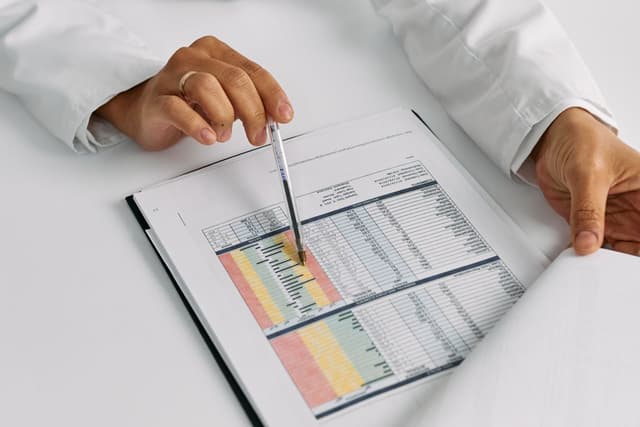
An NGO baseline should establish decision-relevant starting values for programme indicators while documenting context, inequalities and implementation assumptions that may affect results.
Begin with the programme logic
A baseline is most useful when it is connected to a theory of change or results framework. Start by identifying the outcomes the programme expects to influence and the assumptions that connect activities to those outcomes. Then define which indicators need a starting value and what contextual information is required to interpret them.
This prevents the baseline from becoming a broad community assessment that collects interesting information but cannot be compared with later programme results.
Define indicators before questions
Each indicator should have a clear numerator, denominator, unit, disaggregation and data source. If a concept such as empowerment, resilience or service quality is central, define how it will be measured rather than relying on a vague survey question.
Where recognised indicators or validated scales exist, review whether they fit the programme and population. Adaptation may still be necessary, but the rationale should be documented.
Use a sampling design that matches the claim
If the baseline will be used to estimate programme-area conditions, the sample should represent the relevant population as far as practicable. Cluster sampling may be appropriate for geographically dispersed households, while facility or participant-based programmes may use other frames.
Sample size should reflect the indicators, expected precision, design effect, subgroup analysis and nonresponse. A large sample does not compensate for biased selection.
Combine methods when the programme needs explanation
Quantitative surveys can establish indicator levels. Qualitative interviews, FGDs and KIIs can explain why conditions look the way they do, how services are experienced and which barriers may affect implementation. Observation or administrative data can add another evidence layer.
Mixed methods are most useful when the components answer complementary questions rather than repeating the same questions in different formats.
Protect ethics and inclusion
Baseline studies may involve children, health information, disability, gender-based risks, displaced populations or other sensitive contexts. Consent, assent where applicable, privacy, safeguarding, referral protocols and data minimisation should be designed into fieldwork.
Inclusion also requires practical attention to language, accessibility, interviewer gender, timing and locations that allow different groups to participate safely.
Write a baseline that can be used later
The report should provide indicator values with definitions and disaggregation, describe the sample and fieldwork, explain limitations and document contextual findings. It should also preserve the questionnaire, codebook and analysis logic needed for later rounds.
A baseline is an investment in future comparison. If the endline team cannot understand exactly how the starting value was produced, part of that investment has been lost.
Plan the baseline around future evaluation needs
An NGO baseline should be designed with the endline in mind. Teams need to ask which indicators must be measured again, which subgroups will require comparison and whether the programme expects change at household, individual, facility, community or institutional level. Sampling, respondent identifiers and data structures should support that future analysis.
If a panel is planned, tracking procedures and consent for recontact are important. If repeated cross-sections will be used, the sampling procedure should be reproducible. Designing for future comparison reduces the risk that the endline discovers that a key baseline measure cannot be reconstructed.
Measure programme exposure separately from outcomes
Where implementation has already begun or may start during baseline fieldwork, researchers should distinguish outcome measures from programme exposure. Respondents can be asked whether they have heard of, received or participated in activities without assuming that exposure caused their current situation.
This information can help identify contamination, early reach or differences in implementation timing. It is also useful later when analysing whether outcomes vary by actual exposure, although such analysis does not automatically establish causality. Clear timing records help the evaluation interpret what the baseline truly represents.
Include contextual and equity variables
Programme outcomes rarely occur in isolation. A baseline can capture contextual factors that may influence results, such as service availability, shocks, household resources, social norms or geographic access.
It should also collect the characteristics needed to examine whether starting conditions differ across groups relevant to equity and inclusion. These variables help programme teams identify who may face greater barriers before implementation begins. They also support more meaningful endline analysis by showing whether improvements are shared or concentrated among participants who were already better positioned.
Use qualitative work to test programme assumptions
A baseline is an opportunity to investigate the assumptions behind the theory of change. Interviews and focus groups can explore why people do or do not use services, how decisions are made within households or institutions, which barriers are considered most important and whether proposed activities are acceptable. This evidence can reveal assumptions that require programme adaptation before significant resources are committed. Qualitative findings should be analysed systematically and linked to implementation decisions rather than added as a small narrative section after the quantitative tables.
Create a baseline package for future teams
The final baseline deliverable should include more than a report. A reusable package may contain the clean dataset, codebook, questionnaires, translations, sampling documentation, weighting procedures, analysis syntax, indicator reference sheet, fieldwork report and a record of deviations from the protocol. These materials make later comparison more efficient and defensible, especially if different researchers conduct the endline. Version-controlled documentation is one of the simplest ways to protect the value of the baseline investment over the life of the programme.
Agree how baseline findings will be used
Before reporting begins, programme teams should identify which baseline findings could influence implementation. High-risk geographic gaps may affect targeting; unexpected barriers may change communication or service delivery; large inequalities may require revised inclusion strategies.
The report can therefore separate findings that establish future comparison values from findings that require immediate management attention. This distinction helps prevent the baseline from being archived after indicator tables are produced. It also reinforces that baseline research is both a measurement exercise and an early opportunity to improve programme design.
How Surveysphere Africa can support
Surveysphere Africa supports NGOs and development partners with baseline design, mixed-method fieldwork, indicator measurement, analysis and reporting across African programme contexts.